
Chevrolet 350 Engine Diagram: A Comprehensive Guide
Chevrolet forums offer invaluable resources, including discussions on the 350 engine, and technical service bulletins for Silverado and Tahoe models․
Decoding your Chevrolet VIN is crucial for identifying specific 350 engine configurations, aiding in accurate diagram interpretation and repair procedures․
GMT 400, 800, and 24 platform forums provide targeted support, while 2025 model year insights enhance understanding of modern Chevrolet systems․
The Chevrolet 350 cubic inch small-block V8 engine stands as an icon of American automotive engineering, renowned for its versatility, durability, and performance potential․ Introduced in 1967, it quickly became a mainstay in a vast array of Chevrolet vehicles, from trucks like the Silverado and Tahoe, to muscle cars and passenger sedans․ Its enduring popularity stems from its relatively simple design, readily available parts, and exceptional tunability․
Understanding the 350 engine requires access to detailed diagrams and manuals․ Online Chevrolet forums, particularly those dedicated to GMT 400, 800, and 24 platforms, are treasure troves of information․ These communities often share scanned copies of original service manuals and wiring diagrams, alongside troubleshooting advice and repair guides․ Technical Service Bulletins (TSBs), dating back to models like the 2007-2013 GMT900, provide valuable insights into common issues and factory-recommended fixes․
The engine’s adaptability has ensured its continued use and modification well into the 2025 model year and beyond, making a solid grasp of its components and systems essential for both restoration projects and performance upgrades․ A Chevrolet VIN decoder can help pinpoint the exact specifications of a particular 350 engine․
Historical Overview of the 350 Chevrolet Small-Block
The Chevrolet 350 small-block V8’s lineage traces back to the groundbreaking Chevrolet small-block engine family of the late 1950s․ Officially debuting in 1967, the 350 was designed to offer a balance of power and efficiency, quickly becoming the standard engine for many Chevrolet models․ Its initial applications spanned across various platforms, including the Silverado and Tahoe predecessors․
Throughout the 1970s and 80s, the 350 underwent numerous revisions to meet evolving emissions standards and performance demands․ GMT 400 and GMT 800 truck platforms heavily relied on this engine․ Accessing historical diagrams and service manuals, often shared within Chevrolet enthusiast forums, reveals these changes․ Technical Service Bulletins (TSBs) from periods like 2007-2013 (GMT900) detail specific updates and fixes․
Even with the introduction of newer engine technologies, the 350 remained a popular choice for its affordability and ease of modification․ The engine’s enduring legacy continues into the 2025 era, with enthusiasts actively restoring and upgrading these classic powerplants, utilizing resources like VIN decoders to verify original specifications․
Common Applications of the 350 Chevrolet Engine
The Chevrolet 350 engine found widespread use across a diverse range of vehicles, solidifying its reputation as a versatile powerplant․ Primarily, it powered full-size Chevrolet and GMC trucks, including the Silverado and Sierra, across GMT 400, 800, and 24 platforms․ These applications often benefited from detailed engine diagrams available through enthusiast forums․
Beyond trucks, the 350 was a staple in Chevrolet’s passenger car lineup, including the Camaro, Chevelle, and Impala․ The Tahoe and Suburban SUVs also frequently featured the 350, particularly in earlier generations․ Technical Service Bulletins (TSBs) from years like 2022 and 2007-2013 (GMT900) address common issues encountered in these vehicles․
Even into the 2025 model year, the 350’s influence persists in restoration projects and custom builds․ VIN decoding helps identify original engine configurations, aiding in accurate repairs and modifications․ Online Chevrolet forums remain active hubs for sharing knowledge and troubleshooting, ensuring the 350’s continued relevance․

Engine Components and Systems
Chevrolet forums discuss 350 engine parts, while TSBs detail system repairs for Silverado and Tahoe models, aiding diagram understanding․
VIN decoding clarifies component specifics․
Block and Internal Components
The Chevrolet 350 engine block, a cornerstone of its durability, is typically cast iron, though aluminum aftermarket options exist․ Diagrams reveal the precise location of main bearing bores, cylinder bores, and coolant passages within the block itself․ Understanding these internal features is vital for any rebuild or repair․
Internal components, such as the crankshaft, connecting rods, and pistons, are intricately linked to the block’s design․ Chevrolet forums frequently discuss crankshaft material variations and balancing techniques․ Technical Service Bulletins (TSBs) may address specific issues related to piston design or connecting rod failures in certain model years․ The VIN can help pinpoint original equipment specifications․
Diagrams clearly illustrate the relationship between these components, showing piston travel within the cylinder bores and the crankshaft’s rotational path․ Proper assembly requires meticulous attention to bearing clearances and torque specifications, often found within dedicated Silverado or Tahoe repair manuals․ GMT 400, 800, and 24 platform variations may exhibit slight differences in internal component dimensions․
Cylinder Heads: Design and Variations
Chevrolet 350 cylinder heads are critical for engine performance, with numerous designs available․ Diagrams showcase port shapes, valve angles, and combustion chamber volumes, influencing airflow and compression ratios․ Early heads often featured smaller ports, while later designs, like Vortec heads, prioritized flow efficiency․
Variations abound, including cast iron and aluminum construction, differing valve sizes (1․94”/1․50” or 2․02”/1․60”), and various combustion chamber designs․ Chevrolet forums are rich with discussions on head selection for specific applications․ Technical Service Bulletins (TSBs) might address valve guide wear or gasket failures․
Understanding these differences is crucial when interpreting a diagram․ The VIN can help identify the original head type․ Silverado and Tahoe models often utilized specific head configurations․ GMT 400, 800, and 24 platforms may have featured unique head castings․ Detailed diagrams reveal valve spring retainers, valve locks, and rocker arm geometry․
Intake Manifold and Carburetion/Fuel Injection
The Chevrolet 350 intake manifold’s diagram illustrates runner design, crucial for air-fuel distribution․ Early engines primarily used carburetors, with manifolds tailored to specific carburetor types – Rochester Quadrajet, Edelbrock, etc․ Later models transitioned to fuel injection, requiring different manifold designs with fuel rails and injector provisions․
Variations include dual-plane and single-plane manifolds, impacting torque and horsepower characteristics․ Chevrolet forums detail performance gains from manifold swaps․ Technical Service Bulletins (TSBs) may address intake leaks or carburetor adjustments․ A diagram clarifies vacuum hose routing, vital for proper operation․
Silverado and Tahoe applications often featured specific intake setups․ GMT 400, 800, and 24 platforms saw manifold evolution․ Understanding fuel injection systems requires studying diagrams of fuel pumps, pressure regulators, and sensors․ The VIN can assist in identifying the original fuel delivery system․
Valve Train: Camshaft, Lifters, and Rocker Arms
A Chevrolet 350 valve train diagram reveals the interplay between the camshaft, lifters, and rocker arms․ Camshafts dictate valve timing, influencing engine performance․ Chevrolet offered various camshaft profiles – stock, performance, and aftermarket – each requiring specific valve spring pressures․
Lifters can be hydraulic or solid, impacting maintenance and performance․ Hydraulic lifters self-adjust, while solid lifters require periodic adjustment․ Rocker arms transmit camshaft motion to the valves․ Diagrams illustrate proper rocker arm geometry for optimal valve lift․
Silverado and Tahoe engines utilized robust valve trains․ GMT 400, 800, and 24 platforms saw refinements in valve train components․ Technical Service Bulletins (TSBs) address valve train noise or failure․ Chevrolet forums discuss upgrades and troubleshooting․ The VIN can help identify factory valve train specifications․
Pistons, Connecting Rods, and Crankshaft
A Chevrolet 350 engine diagram highlights the critical relationship between pistons, connecting rods, and the crankshaft․ The crankshaft converts reciprocating piston motion into rotational power․ Chevrolet utilized cast iron or forged steel crankshafts, with forged being stronger for performance applications․
Pistons transfer combustion force to the connecting rods․ Diagrams show piston ring placement for optimal compression․ Connecting rods link pistons to the crankshaft․ Silverado and Tahoe engines employed durable connecting rod designs․
GMT 400, 800, and 24 platforms featured variations in these components․ Technical Service Bulletins (TSBs) address issues like piston slap or bearing failure․ Chevrolet forums offer insights into upgrades and rebuild techniques․ The VIN aids in identifying factory specifications for these vital parts․

Diagram Interpretation and Usage
Chevrolet diagrams, including wiring and vacuum schematics, are essential for Silverado and Tahoe repairs, aided by VIN decoding․
GMT platform forums offer guidance, while TSBs clarify complex systems, ensuring accurate 350 engine timing and component location․
Understanding Chevrolet Wiring Diagrams
Chevrolet wiring diagrams are fundamental for diagnosing electrical issues within the 350 engine and its associated systems․ These diagrams, often found within service manuals and discussed extensively on Chevrolet forums, utilize a standardized symbology to represent components like sensors, actuators, and the engine control module (ECM)․
Successfully interpreting these diagrams requires understanding color codes for wires, connector pin assignments, and the flow of electrical signals․ Silverado and Tahoe specific diagrams will vary based on model year and options, highlighting the importance of VIN decoding to ensure you’re referencing the correct schematic․
Key elements to identify include ground connections, power sources, and signal pathways․ Technical Service Bulletins (TSBs) often reference specific wiring configurations for common problems․ Online resources and dedicated GMT platform forums provide valuable assistance in deciphering complex circuits, enabling accurate troubleshooting and repair of electrical faults within the 350 engine’s system․
Reading Chevrolet Vacuum Diagrams
Chevrolet vacuum diagrams are crucial for understanding the operation of the 350 engine’s emissions control and fuel delivery systems․ These diagrams illustrate the network of vacuum hoses connecting components like the carburetor or fuel injection system, vacuum advance distributor, and power brake booster․
Interpreting these diagrams requires recognizing the function of each vacuum line and its impact on engine performance․ Silverado and Tahoe models, particularly older ones, rely heavily on vacuum-operated systems, making accurate diagram reading essential for diagnosis․ Chevrolet forums frequently discuss vacuum leak locations and troubleshooting techniques․
Understanding the role of components like the PCV valve and EGR valve is vital․ Technical Service Bulletins (TSBs) may detail specific vacuum routing changes for certain model years․ Utilizing a VIN decoder ensures you have the correct diagram for your specific 350 engine configuration, aiding in identifying and resolving vacuum-related issues within GMT platforms․
Chevrolet 350 Engine Timing Diagrams
Chevrolet 350 engine timing diagrams are fundamental for ensuring optimal combustion and engine performance․ These diagrams illustrate the precise relationship between crankshaft and camshaft positions, dictating valve opening and closing events․ Accurate timing is critical for maximizing power and fuel efficiency, particularly in Silverado and Tahoe applications․
Understanding timing marks on the harmonic balancer and flywheel is essential․ Chevrolet forums often feature detailed discussions on setting timing, including the use of timing lights․ Variations exist based on engine modifications and emissions controls, so referencing the correct diagram for your specific VIN is crucial․
Technical Service Bulletins (TSBs) may address timing-related issues or adjustments for certain model years․ Proper timing prevents issues like pinging, poor idle, and reduced power․ Resources within GMT platform communities provide valuable insights into diagnosing and correcting timing problems, ensuring your 350 runs smoothly․
Locating Components on a 350 Engine Diagram
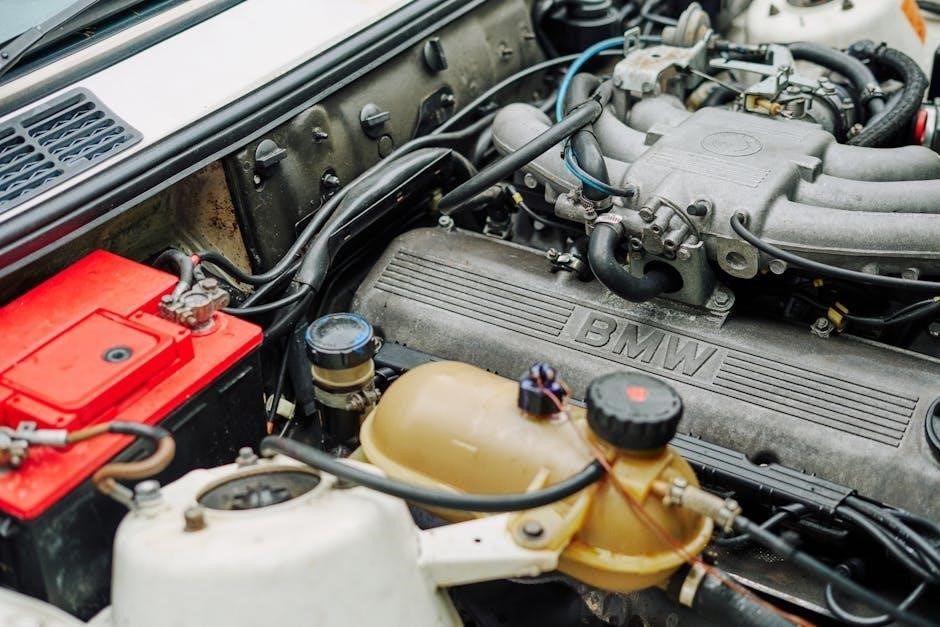
Chevrolet 350 engine diagrams are complex, showcasing numerous components․ Successfully locating parts requires familiarity with engine architecture․ Key elements like the distributor, intake manifold, and cylinder heads are clearly illustrated, aiding in identification for repair or modification․ Silverado and Tahoe diagrams often share similarities, but specific configurations may differ․
Understanding the diagram’s labeling system is vital․ Chevrolet forums frequently discuss component locations and offer guidance for interpreting diagrams․ Utilizing your vehicle’s VIN helps pinpoint the exact engine variant and corresponding diagram․ Resources related to GMT platforms provide focused support for locating parts within those chassis․
Technical Service Bulletins (TSBs) sometimes reference specific component locations during diagnostic procedures․ Mastering diagram interpretation streamlines troubleshooting and ensures accurate repairs, maximizing the longevity of your 350 engine․
Troubleshooting and Repair
Chevrolet forums and TSBs offer diagnostic flowcharts for common 350 engine issues, aiding repair․ VIN decoding confirms specific configurations․
Silverado and Tahoe support groups provide valuable insights, while GMT platform resources assist with targeted troubleshooting and repair procedures․
Common 350 Engine Problems and Diagnostic Flowcharts
Diagnosing a Chevrolet 350 engine requires a systematic approach, often starting with readily available diagnostic flowcharts found within Chevrolet forums and technical service bulletins (TSBs)․ Common issues frequently reported include oil leaks, often stemming from worn valve cover gaskets or oil pan seals, and rough idling, potentially caused by vacuum leaks or carburetor malfunctions․
Overheating is another prevalent problem, frequently linked to a faulty thermostat, radiator issues, or a failing water pump․ Misfires can indicate problems with the ignition system – spark plugs, distributor, or ignition coil – or fuel delivery, such as a clogged fuel filter or failing fuel pump․ Utilizing a diagram of the engine’s wiring and vacuum systems is crucial for pinpointing the source of these issues․
Diagnostic flowcharts typically guide users through a series of tests, starting with visual inspections and progressing to more complex procedures like compression tests and fuel pressure checks․ Silverado and Tahoe forums often host user-shared flowcharts tailored to specific model years and configurations, providing a valuable resource for both novice and experienced mechanics․ Remember to consult the VIN to ensure compatibility with your engine’s specific build․
Technical Service Bulletins (TSBs) for Chevrolet 350 Engines
Chevrolet releases Technical Service Bulletins (TSBs) to inform technicians about common issues and recommended repair procedures for their vehicles, including those equipped with the 350 engine․ These bulletins often address recurring problems not covered under standard warranty, offering solutions discovered through field experience and engineering analysis․
Accessing TSBs is vital for accurate diagnosis and repair․ Resources like online databases allow searching by vehicle year, model (Silverado, Tahoe), and specific complaint․ Common TSBs for the 350 may relate to oil leaks, ignition system malfunctions, or fuel delivery problems․ Understanding the engine’s diagram and wiring schematics is often essential when implementing TSB-recommended fixes․
2022 Silverado 1500 models, for example, have dedicated TSBs available․ Utilizing these bulletins ensures repairs are performed according to Chevrolet’s latest recommendations, potentially saving time and preventing repeat issues․ Forums dedicated to Chevrolet trucks frequently discuss and share information regarding relevant TSBs, creating a collaborative knowledge base․
Chevrolet Forum Resources for 350 Engine Issues
Chevrolet enthusiast forums are invaluable resources for owners tackling 350 engine issues․ These online communities provide a platform for sharing knowledge, troubleshooting problems, and accessing a wealth of experience from fellow Chevrolet owners and mechanics․ Discussions often center around specific model years, like the 2007-2013 (GMT900) platforms, and popular trucks such as the Silverado and Sierra․
When facing a 350 engine challenge, searching forum archives can reveal solutions to similar problems encountered by others․ Members frequently post detailed repair guides, wiring diagrams, and advice on interpreting Technical Service Bulletins (TSBs)․ Dedicated sections for Tahoe and Suburban models offer targeted support․
These forums also serve as a hub for locating specialized parts and tools․ The Chevrolet Forum itself welcomes newcomers and encourages participation, fostering a collaborative environment for all Chevrolet enthusiasts․ Utilizing these resources can significantly simplify the diagnostic and repair process․
Vehicle Identification Number (VIN) Decoding for 350 Engines
Decoding your Chevrolet’s Vehicle Identification Number (VIN) is a critical step when working with a 350 engine․ The VIN provides specific details about the engine originally installed in the vehicle, including its configuration, manufacturing date, and intended application․ This information is essential for obtaining the correct parts, wiring diagrams, and Technical Service Bulletins (TSBs)․

Online Chevrolet VIN decoders are readily available and can quickly reveal crucial engine specifications․ Knowing the original engine code helps ensure compatibility when replacing components or performing repairs․ This is particularly important when dealing with variations within the 350 family, as different versions may require unique parts․

Resources within Chevrolet forums, alongside dedicated Silverado, Sierra, Tahoe, and Suburban sections, often discuss VIN-specific engine details․ Accurate VIN decoding streamlines the troubleshooting process and prevents costly mistakes, especially when referencing information from GMT 400, 800, or 24 platform guides․

Chevrolet Truck Platforms & Forums
Chevrolet truck forums, covering GMT 400, 800, and 24 platforms, offer dedicated support for Silverado and Tahoe owners seeking assistance․
These communities provide valuable insights, diagram discussions, and technical help related to 350 engine issues and 2025 model updates․
GMT 400, 800 & 24 Platforms
Chevrolet’s GMT platforms – 400, 800, and 24 – represent significant eras in truck design, each impacting how the 350 engine was integrated and serviced․ The GMT 400, prevalent in the late 1980s and early 1990s, often requires specific diagrams for its unique wiring and vacuum systems․ Forums dedicated to this platform are invaluable for locating these resources;
Moving into the GMT 800 series (1999-2006), improvements in engine management necessitate understanding updated technical service bulletins (TSBs)․ These platforms frequently feature the 350 engine, and online communities offer troubleshooting advice and diagram interpretations․ The GMT 24 platform (2007-2013) introduced further advancements, demanding familiarity with newer diagnostic tools and procedures․
Accessing dedicated forums for each platform allows owners to share experiences, locate detailed diagrams, and discuss common 350 engine issues․ Silverado and Tahoe owners specifically benefit from these resources, particularly when dealing with older models or performing DIY repairs․ Understanding the nuances of each platform is key to successful maintenance and repair․
Silverado/Sierra Forum Discussions
Silverado and Sierra forums are treasure troves of information for owners seeking diagrams and repair guidance for their 350 engines․ Discussions frequently center around common issues, diagnostic procedures, and locating specific technical service bulletins (TSBs)․ Members often share scanned copies of original service manuals, including detailed engine diagrams, proving invaluable for DIY mechanics․
These online communities provide a platform to ask questions, share experiences, and receive advice from experienced Chevrolet and GMC enthusiasts․ Troubleshooting threads often focus on specific problems, with members collaboratively identifying solutions and providing step-by-step instructions․ Many discussions revolve around interpreting wiring diagrams and vacuum hose routing for the 350․
Furthermore, forum members frequently decode VIN numbers to pinpoint exact engine specifications and identify applicable TSBs․ The collective knowledge within these forums significantly simplifies the repair process, offering a readily accessible resource for Silverado and Sierra owners tackling 350 engine maintenance․
Tahoe & Suburban Forum Support
Tahoe and Suburban forums offer dedicated support for owners navigating the complexities of the 350 engine․ These communities are rich with shared knowledge regarding engine diagrams, repair procedures, and troubleshooting common issues․ Members routinely post requests for assistance interpreting wiring and vacuum diagrams, often receiving detailed responses with annotated images․
Discussions frequently cover locating and understanding technical service bulletins (TSBs) relevant to specific model years and engine configurations․ Experienced forum users often share links to online resources containing service manuals and parts catalogs, simplifying the identification of components shown in engine diagrams․

The collaborative nature of these forums allows owners to pool their expertise, offering solutions to challenging problems and providing guidance on everything from basic maintenance to complex repairs․ Decoding the vehicle’s VIN is a common practice, ensuring accurate identification of engine specifications and applicable service information for the 350․